
The Old Acclaimed Music Forum
Go to the NEW FORUM

As some of you may remember from various polls, my favourite song ever is Elliott Smith - Waltz #2.
One of my favourite discover of past year is Neutral Milk Hotel - In the Aeroplane Over the Sea and I currently can't stop listening to Built To Spill - Velvet Waltz. Jeff Buckley - Grace is in my top 50 and I've liked Golden Brown as far as I can remember... all those songs.
And guess what, Emily is my favourite Joanna Newsom song, Manic Depresion one of my favourite of Jimi Hendrix and Maggot Brain totally blew my mind the first time I heard it.
All those songs are in 3/4 Time (except Golden Brown which is a bit more tricky in the bridges).
So my question is simple : do you have other great songs on 3/4 time ?
(I also totally love the 5/4 part of Will You Smile Again ? by And You Will Know Us By The Trail Of Dead)
rebel waltz by the clash is a realy good song
My current favorite is this!
Can someone dumb down for me exactly how you would recognize what time signature a song is? Maybe I just need to be formally trained in music to understand. Does it have to do with the way the rhythm section plays?
Taken from wikipedia:
"The time signature (also known as "meter signature") is a notational convention used in Western musical notation to specify how many beats are in each measure and what note value constitutes one beat."
The time signature usually consists of two numbers. The first number tells you how many notes there are in each measure. The second number tells you how long each note lasts. So for instance, a song in 3/4 signature has three notes per measure, with each note being a quarter note.
Hopefully I'm making sense! The link I posted above may help. 3/4 songs are often waltzes. The main rhythm you hear (starting at 0:12) is a dah-dah-dah, dah-dah-dah kinda thing.

I play a few instruments, but I'm pretty much self-taught, so my knowledge of Western musical conventions is not all there.
I get the first number. It's how many repetitive beats you hear between the stressed beat which starts the cycle all over again. DAH-dah-dah, DAH-dah-dah is 3/4.
But I'm a little shaky on the second number. How can you tell the difference between 6/8 and 6/4? In other words, if you are hearing six repetitive beats, how do you know whether they are eighth notes or quarter notes? If the answer is that the 6/8 beats are grouped into two triplets, then why isn't it just 3/8 with twice as many measures? Or 3/4 for that matter?
Also, if you have 4 quarter notes per measure, would you not also have 2 half notes? So what's the difference between 2/2 and 4/4?
as a guitar teacher, i should really know this... truth is, i'm not exactly sure.
i'm pretty sure only the top number matters, and that it represents how many beats the pattern of accents goes for. so the difference between 2/2 and 4/4 is that in 4/4, the pattern of accents lasts for four beats, where as it only lasts for two in 2/2. the difference between 6/8 and 3/4 is that in 6/8 there's an accent on a note that isn't counted in 3/4.
for the bottom number, i think you just use whatever is convenient to read and write.
that's what i think it is, but i'm not 100% sure. maybe someone else can clear things up.

The bottom number represents the actual notes. If it is in 2/2, then a half note will be one, in 4/4 a quarter note will be one, in 8/8 an eighth note will be one, etc.
2/2, 4/4 and 8/8 would all sound the same! (I think)
I would say that its actually more difficult to explain time signatures than understand them. THey refer to the rythym of the song. IN 4/4(which most pop and rock songs are in) time everything is organized in groups of four. If you are tapping the beat of the song each tap would be a beat and in 4/4 4 beats would make a measure. The first beat of each measure is stressed, or slightly louder or noticeable. Throughout the song everything will (riffs, verses choruses) tend to follow a pattern in that they are organised in a number of measures equal to or divisible by 4 (ex. the verse would be 8 or sixteen measures long)A riff that takes up one measure would be played 4 times. It is same for other time signatures (3/4) but is more diificult to understand.
isn't Velvet Waltz actually in 6/8 ? And if so, does that technically make it not a waltz (at least in the traditional sense)?
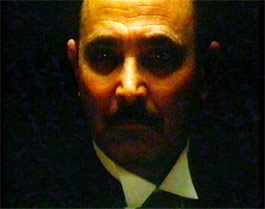
My Top 5 song in ¾:
5. GEORGES BRASSENS “La Marine” (1953)
Merci beacoup, Nicolas. Vraiment c’est une belle chanson, avec des petites touches de flamenco.
4. ELLIOTT SMITH “Waltz #2” (1998)
Of course, Nassim. A great song, especially the goose-bumps bridge (with that “on and on and on” at 2’25” followed with this “I’m tired, I’m tired” ).
3. NEIL YOUNG “Only Love Can Break Your Heart” (1970)
When you were young and on your own / How did it feel to be alone?
2. LEONARD COHEN “So Long Marianne” (1968)
Almost 1/3 of the repertoire of Cohen is played with a ¾ beat (especially in his first album), so I could have chose another song, for instance the superb “Take This Waltz” about a poem from García Lorca. But this songs git so many charms, the wonderful lyrics, the evocative accordion and mandoline, the sweet female backing vocals and (my favourite) the crazy snare drum part that can be heard from 3’18”
1. NINO ROTA “The Godfather Waltz” (1972)
I’m going to cut and paste my comments for the AM Forum Songs Poll (that remained unreleased because the song was not selected): “The screen is completely in black. Then a single trumpet plays an incredibly sad melody with a distant Mediterranean flavour (the introduction of the mandolin makes this Italian connection much clearer). But not in the movie. After the trumpet intro a voice out of nowhere says: “I believe in America”. Then an overhead-lighted closed-up Bonasera asks Don Corleone to kill someone. Terrific.”
Damn, too many mistakes. The Cohen part should go like that: "Almost 1/3 of the repertoire of Cohen is played with a ¾ beat (especially in his first album), so I could have chosen another song, for instance the superb “Take This Waltz” from a poem by García Lorca. But this song got so many charms, the wonderful lyrics, the evocative accordion and mandolin, the sweet female backing vocals and (my favourite) the crazy snare drum part that can be heard from 3:18"
So, how would someone who wasn't trained in music, say Hank Williams, Woody Guthrie, or Robert Johnson, know what time signature they were using? Would there be a time signature if someone who had musical talent but no musical training just sat down and wrote a song?
I'm pretty sure there would be, it is quite natural to follow a regular rythm even if you don't care which one it is.
Talking about Hank Williams, I'm so Lonesome I Could cry is a wonderful 3/4 song !
After a check during my transatlantic holidays, here are the songs in 3/4 (or maybe 6/8 for part of them) time which would be in my top 500 songs.
Elliott Smith - Waltz #2 (favourite song ever), and New Disaster
Queens of the Stone Age - A Song for the Deaf (#3 and favourite song by my favourite band)
Jeff Buckley - Grace
Fever Ray - I'm Not Done (favourite song of 2009)
Kanye West - Spaceship
Built to Spill - Velvet Waltz
Led Zeppelin - Since I've Been Loving You
TV on the Radio - Ambulance and Love Dog (favourite song of 2008)
Red Hot Chili Peppers - Breaking the Girl (one of my 2 favourite songs as a teenager)
Animal Collective - Leaf House (not sure all the song follow the same time signature)
Caribou - She's the One
Eels - Spunky
Fleet Foxes - Tiger Mountain Peasant Song
Funkadelic - Maggot Brain
Kyuss - Supa Scoop and Mighty Scoop (only the intro is in 3/4...)
Lil Wayne - A Milli
M.I.A. - Bird FLu
Neutral Milk Hotel - in The Aeroplane Over the Sea
Pierre Lapointe - Au Pays des Fleurs de la Transe
Radiohead - How To Disappear Completely
Sufjan Stevens - The Predatory Wasp of the Palisades is out to get Us
The Beatles - I Want You (She's So Heavy) (only part of the song is in 3/4)
The Hives - Diabolic Schemes
The Pogues - A Pair Of Brown Eyes
Weezer - My Name is Jonas
and other songs I like :
Joana Newsom - Emily
Jimi Hendrix - Manic Depresion
Pavement - Stop Breathin'
The Stranglers - Golden Brown (tricky time signature : 3,3,3,4)
Brian Jonestown Massacre - Ballad of Jim Jones
Calexico - Sunken Waltz
i have written songs in 3/4, 6/8, and 5/4 while being completely oblivious to it at the time.
Actually, I just made the assumption that those guys had no musical training! I could be wrong.
Here are some Beatles songs mostly in 3/4 though songs like "We Can Work It Out" uses 3/4 on the bridge and "Lucy In the Sky With Diamonds" alternates between 3/4 and 4/4 time signatures. Many Beatles song actually use more than one time signature. Frank Zappa was another one who mixed in a lot OF odd time signatures.
Baby's In Black- 1964
You've Got To Hide Your Love Away 1965
Norwegian Wood- 1965
Long, Long, Long- 1968
I Me Mine- 1969
Dig A Pony- 1969
Friends - The Beach Boys